

Mongolia’s Christian Renaissance: Growth, Challenges, and Transformation
Once a land with virtually no known evangelical Christians, Mongolia has experienced a spiritual revolution over the last three decades. Following the collapse of Soviet-aligned communism in 1990, a massive spiritual vacuum was filled by an explosive movement of faith. Today, with a thriving indigenous church led by a new generation of believers, Mongolia stands as one of the most remarkable stories of Christian transformation in modern history.
"For nothing will be impossible with God." — Luke 1:37 (ESV)
In 1990, Mongolia had essentially zero evangelical Christians. Decades of Soviet-aligned communist rule had eliminated visible Christian presence from this Central Asian nation. Churches had been closed, religious leaders persecuted, and generations raised under atheist ideology knew nothing of the gospel.
Then everything changed.
Within three decades, the Mongolian church has grown from nothing to an estimated 50,000 to 100,000 believers—one of the fastest church growth rates in modern missions history. Young people have led the movement. Indigenous churches have been planted across the country. A generation that grew up under communism is now raising children in the faith.
The story of Christianity in Mongolia is a story of what God can do when doors open and faithful witnesses respond. It offers both inspiration and instruction for the global church—a reminder that no nation is beyond God's reach and no spiritual darkness too deep for His light to penetrate.
Understanding Mongolia: Land of the Blue Sky
Mongolia is a landlocked nation sandwiched between Russia to the north and China to the south. It is one of the world's most sparsely populated countries—approximately 3 million people spread across territory larger than Alaska. Vast steppes, the Gobi Desert, and the Altai Mountains define its dramatic landscape. Ulaanbaatar, the capital, is home to nearly half the national population.
Mongolians trace their heritage to Genghis Khan, whose thirteenth-century empire became the largest contiguous land empire in history. This legacy shapes national identity even today. Nomadic pastoralism—the traditional lifestyle of herding horses, sheep, goats, cattle, and camels across the grasslands—remains culturally significant, though rapid urbanization since 1990 has transformed Mongolian society.
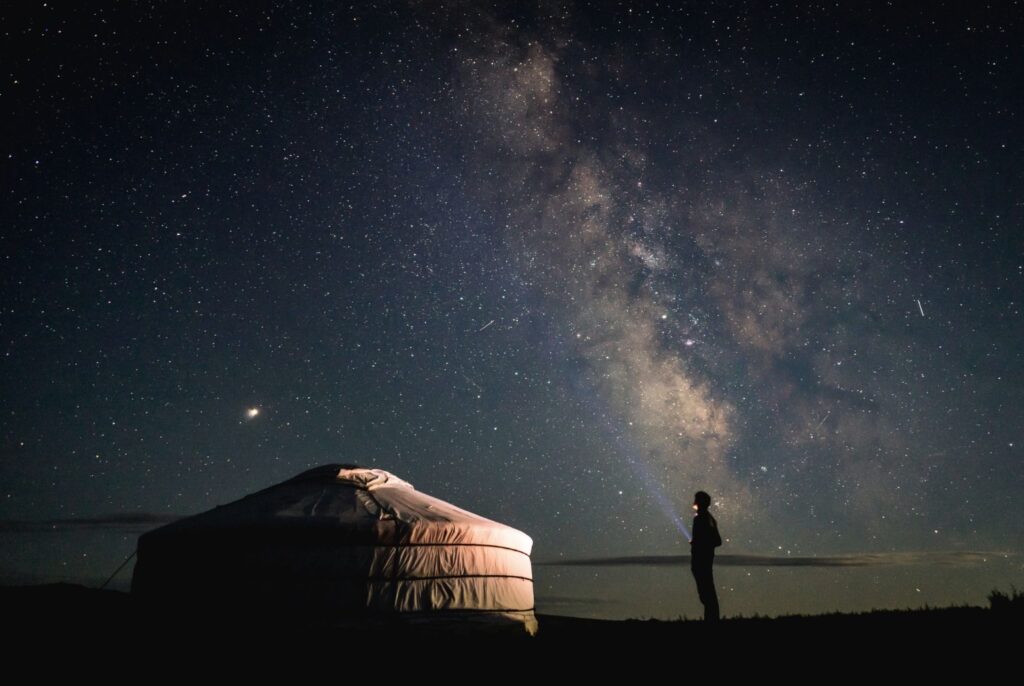
The climate is extreme. Winters bring temperatures of minus 30 degrees Celsius or colder. Summers are brief but can be intensely hot. The traditional ger (yurt) dwelling evolved to handle these conditions, and many Mongolians—even those living in Ulaanbaatar's outskirts—still reside in these portable, circular tents.
Mongolia's economy depends on mining, agriculture, and increasingly on services and tourism. Poverty remains widespread despite mineral wealth, and many families struggle to meet basic needs. Economic pressures drive migration—from rural areas to Ulaanbaatar, and from Mongolia to other countries for work.
Religious Landscape: From Buddhism to Spiritual Openness
Understanding Mongolia's religious history helps explain both the challenge and the opportunity for the gospel.
Indigenous shamanism was Mongolia's original spiritual tradition—a belief system centered on spirits inhabiting the natural world, ancestors who could influence the living, and shamans who mediated between human and spirit realms. Elements of this worldview persist today, and shamanism has experienced something of a revival since communism's fall.
Tibetan Buddhism arrived in Mongolia in the 16th century and became the dominant religion. At its height, an estimated one-third of Mongolian men were Buddhist monks. Monasteries dotted the landscape, and Buddhist practice permeated daily life.
Then came communism. The Soviet-aligned People's Republic of Mongolia, established in 1924, systematically suppressed religion. Monasteries were destroyed—over 700 of them. Thousands of monks were killed or forced to secularize. Buddhist practice was driven underground, and an entire generation was raised in atheist ideology.
This created a spiritual vacuum. When communism collapsed in 1990, Mongolians were spiritually hungry but religiously rootless. Traditional Buddhism had been disrupted. Atheism offered no ultimate meaning. The national psyche was searching for something more.
Into this vacuum, the gospel came.
The Christian Explosion: 1990 to Present
Christianity was not entirely unknown in Mongolia before 1990. Nestorian missionaries had reached the region via the Silk Road centuries earlier, and some Mongol clans had Christian members during the empire period. A small Russian Orthodox presence existed along the northern border. But effectively, there were no Mongolian evangelical believers when the communist era ended.
The transition to democracy in 1990 opened Mongolia to religious freedom for the first time in generations. Missionaries arrived—particularly from South Korea, which sent hundreds of workers, but also from America, Europe, and other Asian nations. They brought resources, training, and an evangelistic urgency.
The response exceeded expectations. Mongolians, especially young people, proved remarkably open to the gospel. The first believers were baptized. Small churches formed. By the mid-1990s, the Christian community numbered perhaps 1,000 to 2,000. . By 2000, it had grown to several thousand. By 2010, estimates ranged from 30,000 to 50,000. Today, the Mongolian church numbers somewhere between 50,000 and 100,000—roughly 1-2 percent of the population.
This represents one of the most dramatic church growth stories of the past half-century.
What Drives the Growth?
Several factors help explain Mongolia's remarkable spiritual harvest.
Post-communist spiritual hunger. Seventy years of atheist suppression left Mongolians spiritually empty. When religious freedom arrived, people were searching for meaning, purpose, and hope that materialism could not provide. The gospel offered answers to questions that atheism had forbidden.
Youthful population. Mongolia's median age is under 30 Young people have been at the forefront of conversion and church growth. Less bound to traditional religious identities than their elders, they proved open to encountering Christ.
Indigenous leadership development. From early on, missionaries emphasized training Mongolian Christians to lead. Today, the church is predominantly led by Mongolians rather than foreigners. This ownership has produced sustainable growth and authentic contextualization.
Holistic ministry. Many Christians combined gospel proclamation with practical compassion—addressing poverty, health needs, education, and social problems. This integrated witness demonstrated the gospel's relevance to all of life.
Bible availability. The Scriptures were translated into Mongolian, making God's Word accessible in the heart language of the people. This foundation has enabled personal study, discipleship, and biblical literacy.
Community and belonging. The church offered genuine community in a society experiencing rapid social change. As urbanization disrupted traditional family and clan structures, churches became new families where people found belonging, support, and authentic relationships.
Nomadic worldview bridges. Certain aspects of Mongolian culture created unexpected connections to biblical faith. The concept of a shepherd God resonates in a pastoral society. Spiritual intuition—an openness to supernatural reality—made the gospel's claims about God, spirits, and eternal life plausible rather than alien.
Challenges Facing the Mongolian Church
The Mongolian church's remarkable growth has also exposed significant challenges that require attention and prayer.
Depth of discipleship. Rapid growth sometimes outpaces spiritual maturity. Many believers came to faith quickly but need ongoing discipleship to grow into mature followers of Christ. Churches need trained teachers and robust discipleship programs.
Leadership development. The need for pastors, teachers, and church planters exceeds the supply. Training programs exist, but the demand is enormous. Many churches are led by young, relatively inexperienced believers who need mentoring and continued education.
Economic pressures. Poverty affects church members and leaders alike. Pastors often cannot be supported full-time by their congregations. Believers struggle with the same economic challenges as their non-Christian neighbors, and financial stress can undermine spiritual growth.
Cultural integration. The church must continue becoming authentically Mongolian rather than appearing as a foreign import. This requires thoughtful contextualization—distinguishing between biblical essentials and cultural forms that missionaries brought from elsewhere.
Growing nationalism. Some segments of Mongolian society associate Christianity with foreign influence, particularly Western or Korean. Nationalist sentiment can create suspicion toward converts and pressure against Christian growth.
Government regulations. While Mongolia maintains religious freedom, regulations have increased in recent years. Foreign missionary visas have become more difficult to obtain. Registration requirements for religious organizations have tightened. These trends bear watching.
Mission Eurasia in Mongolia
Mission Eurasia has been privileged to participate in Mongolia's spiritual awakening through our School Without Walls program and related ministries.
School Without Walls provides flexible, hands-on leadership training that equips Mongolian Christians for effective ministry without requiring them to leave their communities or families. The program emphasizes biblical knowledge, practical ministry skills, and personal spiritual formation. In 2023, 12 SWW coordinators trained approximately 1,000 students across the country, and 11 new churches were planted through graduates' ministry.
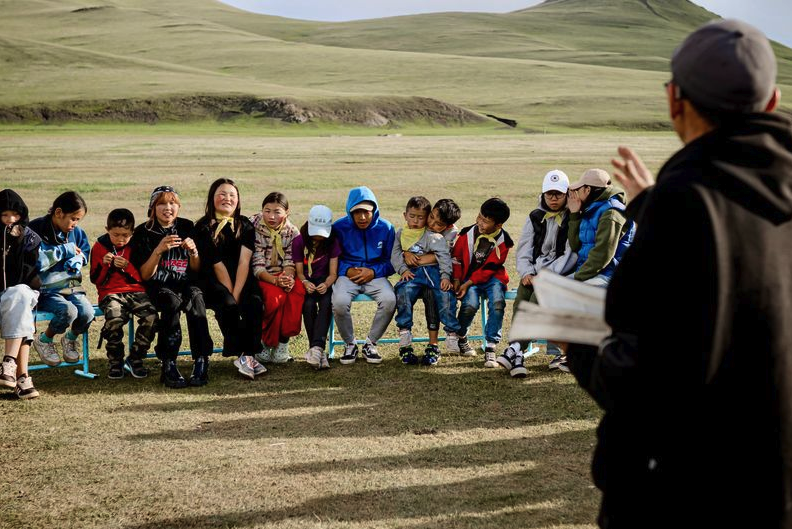
Summer Bible camps reach Mongolian children with the gospel. These camps combine fun activities, relationships with Christian leaders, and age-appropriate Bible teaching. For many children, camp provides their first meaningful encounter with Jesus. Follow-up throughout the year helps seeds planted during camp take root and grow.
The philosophy underlying all Mission Eurasia ministry in Mongolia emphasizes indigenous leadership. We are not building churches dependent on Western resources. We are equipping Mongolian believers to build, lead, and sustain their own churches for generations to come. When missionaries eventually leave—as visa restrictions may require—the Mongolian church will continue to thrive.
Stories of Transformation
The Mongolian church is built on transformed lives. Each statistic represents real people who have encountered Jesus and been changed.
A young woman who grew up in a ger on the steppe with no knowledge of Christianity attended a summer Bible camp and gave her life to Christ. Today she serves as a camp leader, sharing with children the hope she discovered as a child herself.
A university student joined a campus fellowship out of curiosity and found not just ideas but a community that loved him unconditionally. He is now training through School Without Walls to plant churches in unreached areas of the country.
A father who had struggled with alcoholism—a pervasive problem in Mongolia—encountered Christ through a neighbor's witness. His transformed life has opened doors for the gospel throughout his extended family.
These stories multiply across the country. Each transformed life becomes a witness. Each witness plants seeds. The harvest grows.
A Biblical Perspective: Prepared by God
The Mongolian church's explosion invites theological reflection. Scripture teaches that God prepares hearts, nations, and moments for the gospel.
"He made from one man every nation of mankind to live on all the face of the earth, having determined allotted periods and the boundaries of their dwelling place, that they should seek God, and perhaps feel their way toward him and find him" (Acts 17:26-27). God determined Mongolia's place and time. He prepared the Mongolian people through their history—even through the suffering of the communist era—to be ready for the gospel when the door opened.
"I planted, Apollos watered, but God gave the growth" (1 Corinthians 3:6). Missionaries planted. National leaders watered. But the explosive growth is God's work. Human effort alone cannot explain what has happened in Mongolia.
This gives both humility and confidence–humility because the growth is God's, not ours; confidence because what God has begun, He will complete.
How You Can Participate in Mongolia's Story
The Mongolian church needs partners who will pray, give, and stand alongside national believers as they continue the work.
Pray for continued gospel growth and protection of religious freedom. Pray for discipleship depth—that new believers would grow in maturity and knowledge of Christ. Pray for leadership development—more trained pastors and teachers to shepherd the growing church. Pray for summer Bible camp outreach to children—that seeds planted would bear eternal fruit. Pray for the church to remain authentically Mongolian while staying biblically faithful.
Partner with Mission Eurasia's work in Mongolia. Support School Without Walls training that equips Mongolian leaders for ministry. Enable summer Bible camps to reach more children with the love of Christ. Help resource church planters and provide materials for discipleship.
At Mission Eurasia, we have the privilege of participating in Mongolia's remarkable spiritual awakening. Your partnership trains Mongolian leaders who are building lasting churches for generations to come.
The Story Continues
From zero to tens of thousands in one generation, the Mongolian church's growth testifies to what God can do when His Spirit moves, and His people respond in faith.
The church is young and faces real challenges. Discipleship, leadership, economic pressure, and cultural integration all require attention and prayer. But the foundation is strong. The momentum is real. And the God who began this good work will be faithful to complete it.
The story of Christianity in Mongolia is still being written. Each year brings new believers, new churches, and new leaders raised up to carry the gospel forward. The next chapter is being written now.
Will you be part of it?
Related Articles
Training and Equipping the Next Generation of Christian Leaders in Eurasia

From Participants to Leaders: Stories of Transformation Through Christian Leadership Training
Transforming Communities Through Effective Leadership Development
Equip a Leader, Transform a Nation
The spiritual renaissance in places like Mongolia is fueled by indigenous leaders. Help us train the next generation of Christian influencers to reach their own communities.